Monday, April 23, 2012

Announcing Our Blue Ribbon Advisory Committee

Every few weeks Judy and I look at ourselves and ask, "What the hell are we doing?!!" What do we really know about development in Africa? We've got no formal training. We've got little relevant experience. We're unfamiliar with the culture, the daily needs and the challenges these people face.

OK, we're passionate about giving people a chance to make a better life. We ask lots of questions and we're a pretty quick study. Our greatest strength is understanding how little we really know.

We came to the conclusion that Eliminate Poverty Now needs a major injection of smarts about third world development. And in the last few years we've been blessed to work with people who have the technical knowledge and decades of experience to keep us moving in the right direction. So we're proud to announce the formation of the Eliminate Poverty Now Advisory Committee. It will provide guidance on development initiatives, comment on specific project proposals and help connect us to outstanding people doing outstanding work. And it's a very impressive group.

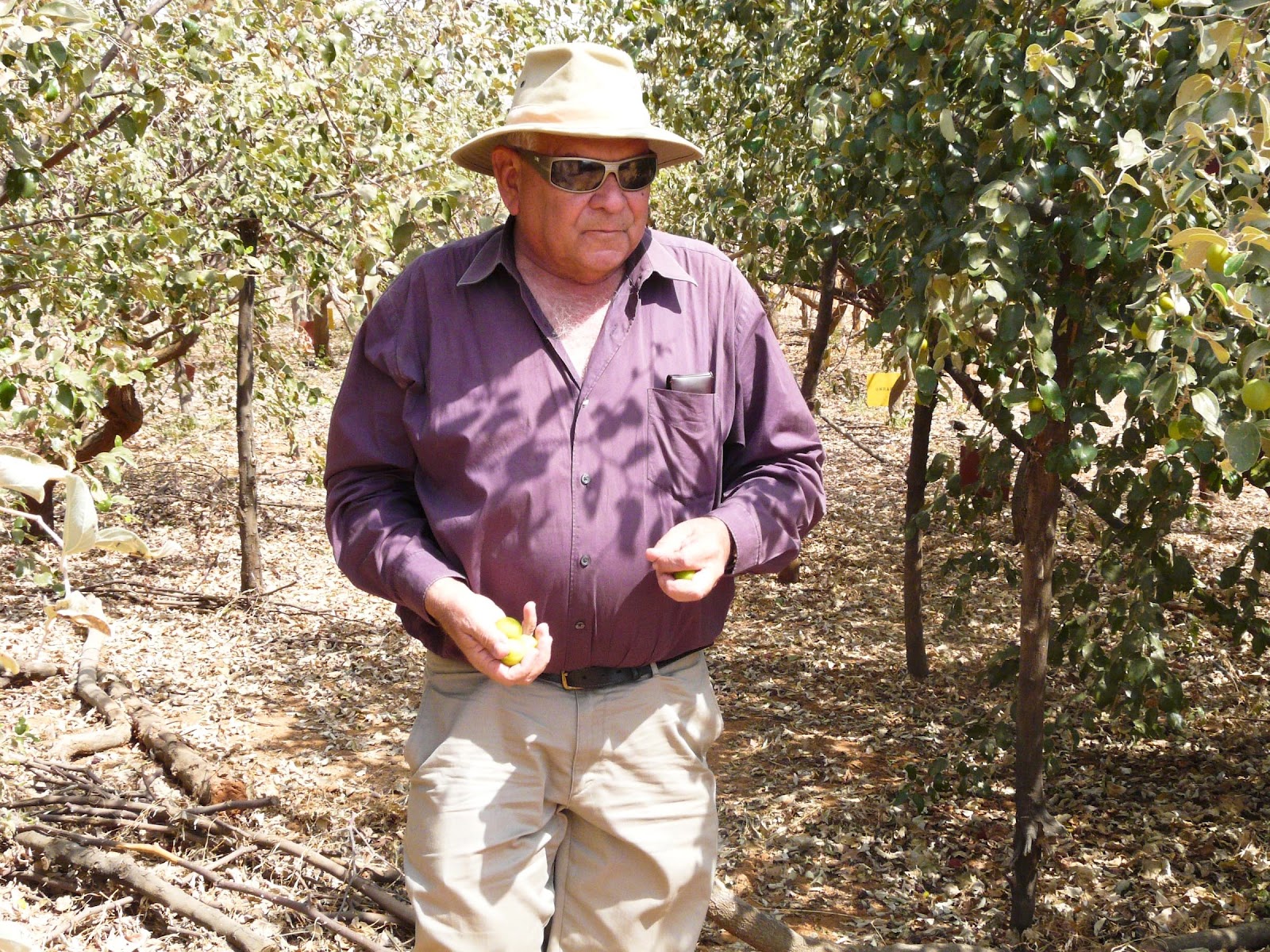
Dov Pasternak
Let's start with Professor Dov Pasternak. As you know from previous posts, Dov is a world renowned agricultural scientist who holds a UNESCO World Chair in Desertification. Now in his early 70's, Dov spent the first 30 years of his career at Ben Gurion University where he and several colleagues developed drip irrigation and introduced it to many regions of the world. Over the last 10 years Dov has worked with thousands of rural farmers in West Africa to use agriculture as a path out of extreme poverty.

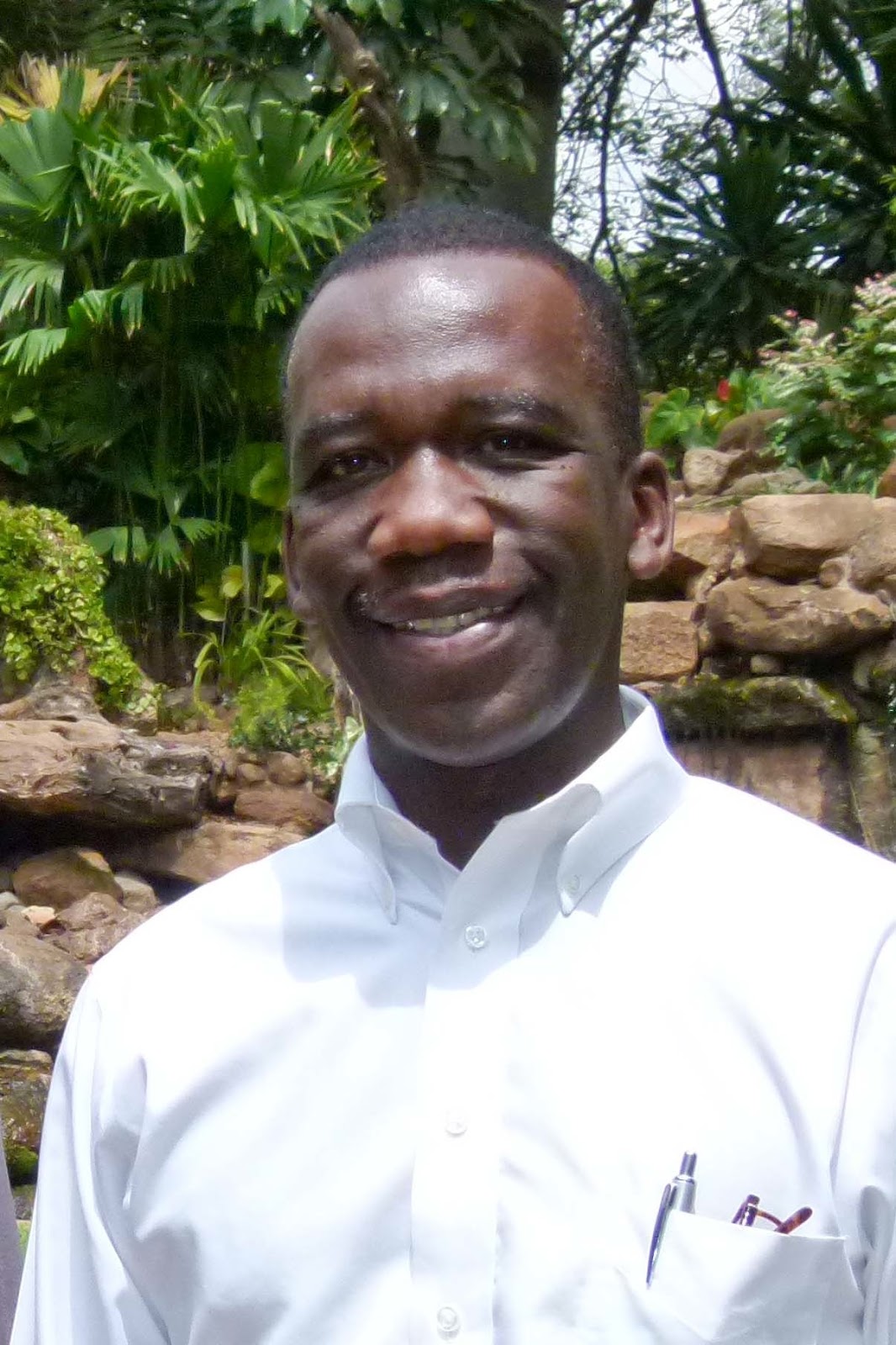
Pete Ondeng
Our next member is Pete Ondeng. Pete was the first professional relationship we built in Africa and remains one of our most valued. When we first met, he was head of East African Operations for the Millennium Villages Project. Pete has 20 years of experience with development work in Africa in a variety of capacities and organizations. He was recently invited by the Rockefeller Foundation to become one of eight members of a global steering committee to help develop what they describe as "the seminal guide to impact investing in the social enterprise sector." The framework will be presented at the UN Conference on Sustainable Development in Rio de Janeiro this June.


Rustom Masalawala

Our third member is Rustom Masalawala. We have known Rustom for many years and have worked closely with him in his role as Director of Business Development for the Millennium Villages Project. Rustom combines a technical background in computer science with 20 years of experience in corporate and non-profit organizations. His work with developing economies spans Africa and South Asia. In addition to his work with the Millennium Villages, Rustom was one of the first employees of the Acumen Fund, famous for their concept of "patient capital" to support promising social entrepreneurs.


Yitzchak Abt

The fourth member of our Advisory Committee is Yitzchak Abt. Yitzchak is one of the giants in agricultural development. He founded CINADCO (Israel's Center for International Agricultural Development Cooperation) and served as its director for 30 years. As part of MASHAV, Israel's Center for International Cooperation, CINADCO has been sharing Israel's agricultural technology with developing countries around the world for decades. Over a remarkable 40 year career Yitzchak has overseen the implementation of hundreds of projects and training for tens of thousands of people from Africa, Latin America, and Asia. Yitzchak is approaching 80, and is currently working with a number of NGOs in rural development. We're truly honored that he has agreed to serve on our Committee.

So there you have it! Our 4-member Advisory Committee comes with over 100 years of practical experience and provides us with a wide range of geographic and functional perspectives. We're truly grateful to each of them for agreeing to serve on the committee. And we're confident they will be a tremendous help in our search for partners and projects that can deliver real impact and lasting value.


Monday, April 16, 2012

Notes from the field #7: Farmers of the Future and the "3 N's" Initiative

We're hard at work to insure the pilot phase of Farmers of the Future is a success. But the goal of the program is to change perceptions broadly, not just in 3 schools. To do that we need strong support from the National Ministry of Education, as well as a program which aligns well with national priorities.

Pete Brach, at the garden his family foundation sponsored
We're delighted with the progress on both fronts. First, with regard to aligning with national priorities, our timing is just about perfect. There's a new administration in Niger and one of its top priorities is a program called the "3 N's." It stands for "Nigeriens nourrissent les Nigeriens," or in English, "Nigeriens feeding Nigeriens." It's all about Niger becoming self sufficient in the supply of food. The Farmers of the Future program encourages the upcoming generation to make their living by increasing production of nutritious food. So it's a great fit. And not surprisingly, it's enabled the program to gain widespread support wherever we go.


Our local partners, Hamani Djibo of ONG LIBO and Saidou Abdoussalam of ICRISAT, have done a great job of building awareness and support for the program at the National Ministry of Education. During our visit, we met with the National Minister, Mme Ali Mariama Elhadj Ibrahim, and Mme Amadou Hadijatou
Mme Ali Mariama Elhadj Ibrahim
Niger Minister of Education
Aboubacar, the head of Environmental Education, the arm of the Ministry under which the Farmers of the Future program will fall.

Both women are enthusiastic about the program. They rattled off its many benefits about as well as we could have. And their major question was, "Why only 3 schools?" We explained that we will be in a pilot phase for the next 2 to 3 years to insure we have a program that works effectively. But once we're confident we're achieving the desired results, we'll be ready to expand. Of course, we'll need to line up the financial resources to scale the program. But even the financial resources won't mean much without the enthusiastic support of the Ministry. So this is a big deal!!


As we said in the last post, Farmers of the Future is the most ambitious and complex project Eliminate Poverty Now has undertaken. We've made significant progress in turning Dov Pasternak's dream into a reality but still have a long way to go. Over the years we've learned that patience and perseverance are key to success with development projects in Africa. And no doubt Farmers of the Future will require more than most.

On a lighter note, communicating in three languages in West Africa (our English, French for educated professionals, Djerma for villagers) is a bit like playing telephone. You have to have a sense of humor to do this stuff. See what we mean here:

Friday, April 13, 2012

Notes from the field #6: Farmers of the Future Pilot Phase

After 2 years in development, we started the pilot phase of Farmers of the Future in October 2011. In this post we'll describe details of the program being tested and how it's going.

Farmers of the Future has two main components: a classroom curriculum covering seven major topics and practical experience in a "mini-farm" which we've created adjacent to the school. The program is taught over a period of two years.


In the classroom there are modules on how to grow vegetables and legumes, how to grow trees and how to raise small animals. More broadly, students learn about the environment and how it is changing, the need to manage water, the benefits of irrigation, the importance of nutrition and simple concepts of business. That's a handful for teachers to add to the regular curriculum and a lot for the kids to absorb!

The "mini-farm" has a vegetable garden, tree nursery and animal enclosure. In addition, each farm has a well, pump, and water reservoir for use in irrigation. And the farm is fenced to keep grazing animals out and protect the children's hard efforts.


The scope of the program is broad and continues to expand. The topics of environment and nutrition were recently added. We're looking to incorporate a school lunch program. And we're working out details for income-generating projects for mothers to accelerate attitude change in the broader community.


Suffice it to say, Farmers of the Future is EPN's most ambitious and complex project. As we traveled around to the three pilot schools and visited with all the key players it was clear that much has been accomplished and there's much still to do.

We had hoped to have all teaching materials completed by the start of the school year this past October. But the local supplier didn't come through and we lost valuable time. We conducted an abbreviated teacher training session in January and ended up with a "soft launch" of the program mid-year. We're working hard to complete the teacher's manual and student texts, including the two new subjects, in time for the start of the next school year this October.


 The mini-farms are up and running at all 3 schools and they look good. There's a punch list of items to address but nothing of major concern. Since the teachers typically lack practical farm experience we have an agricultural technician and assistant who work with the students and teachers in the mini-farm and the kids really enjoy the hands-on work.


The ultimate goal of Farmers of the Future is to change attitudes about farming and to recognize its potential to increase income and the availability of nutritious food. While the primary focus is changing attitudes among students, we don't want to miss the opportunity to influence parents as well. Students will have work assignments to do at home and parents will be invited to attend school "open days" where students showcase what they've been learning.


We're particularly excited by the opportunity to leverage the resources available at the school to support income-generating activities for mothers. With the school's available water, fencing and technical assistance there's an opportunity to add programs for adults at minimal additional cost.

For example, we're looking to add a tree nursery program for moms. Growing tree saplings for resale can be a very lucrative business. With relatively little additional space and use of water we can have 20 women growing 20,000 trees. Annual revenues will be approximately $25,000 and expenses only about $6,000. Profits would be split 70% for the individual, 30% to the collective to offset operating expenses, pay for school fees, and create a pool of money to fund other entrepreneurial ventures in the community. We're hoping that nothing will change attitudes faster than a successful profit generator for parents, the school and the community.


Farmers of the Future is our most ambitious project because the goal is to create a program that can eventually be scaled to hundreds or thousands of schools in Niger and other countries in the arid regions of sub-Saharan Africa. To do that we'll need support at the national as well as local level. In our third post we'll describe the exciting progress that's been made in building awareness and support at the highest levels in Niger.

In the meantime, check out this video from our visit to Farmers of the Future.

Wednesday, April 11, 2012

Notes from the field #5: Farmers of the Future: Sowing the Seeds of Africa's Green Revolution

Half our time in Niger was devoted to the Farmers of the Future program. The program teaches modern agricultural practice to primary school children. Over the course of 6 days we held work sessions with our partners, visited 3 pilot schools and met with key officials in the National Ministry of Education and with local leaders to build top-down support for the program.

There's so much to say about Farmers of the Future we'll cover it in 3 separate posts. The first will be devoted to refreshing your memory about how the program began and its primary goals. A second post will update you on progress with the pilot test. And the third will cover the amazing support we're getting at the local and national level.


Farmers of the Future is the brainchild of Dov Pasternak, noted Israeli agricultural scientist and UNESCO World Chair in Desertification. Now in his early 70's, Dov spent the first 30 years of his career at Ben Gurion University of the Negev. Together with several colleagues he developed drip irrigation, the technology that enabled the Israeli desert to bloom, and introduced it to many regions of the world. (An interesting side note: Dov literally wrote the book on the use of salt water for irrigation.)

In 2001, Dov moved to Niger to become lead scientist at ICRISAT's research facility. He spent the next 10 years working with thousands of West African farmers to use agriculture as a path out of extreme poverty. As Dov explains: "Subsistence farming and environmental degradation are major causes of poverty in Africa. A subsistence farmer grows rain-fed crops and consumes almost all that he harvests. As a result he earns little income, keeping him and his family in perpetual poverty. In addition, clearing trees and overgrazing the land leads to soil erosion, loss of soil fertility and reduced crop yields. It's a vicious cycle."

Most Africans are "smallholder farmers," typically with fields of 1-5 acres. The best way to generate income from such small plots is to use intensive farming practices. You start with irrigation so the land can produce several crops a year, not just one. Then you focus on growing high value crops like vegetables and fruits and raising small animals like goats and sheep to use for milk or meat.

Of course it's one thing to describe the change. It's quite another to get people to actually do it. Dov found adults are very set in their ways, practicing farming the same way for generations. He became convinced that the only way to create major change was to reach the next generation, to show young people the great potential in agriculture. And the concept of Farmers of the Future was born.


The program being piloted in Niger teaches primary school children modern concepts and techniques of agriculture. But more than concepts and techniques, the goal is to change the mindset that "farming is just for poor people." It isn't true. Farming can be a good source of income. It can significantly increase the quantities and nutritional value of locally available food. And when practiced properly it can reduce, halt and reverse environmental degradation.

That's why we believe Farmers of the Future will help sow the seeds of Africa's Green Revolution. We hope to excite young people about the possibilities that farming offers and, through them, to influence their parents as well. We'll share details about the pilot program in our next post.

Stay tuned.

Monday, April 9, 2012

Notes from the Field #4: What a marriage! Songhai Centre creates a business incubator using Eliminate Poverty Now’s Women’s Capital Fund, with help from Israeli volunteers and the Peace Corps.

Father Godfrey Nzamujo
Father Godfrey Nzamujo likes to speak in metaphors. Here’s a good one: Agriculture can be a weapon of mass construction.  He also likened Eliminate Poverty Now to the perfect marriage partner.  He sees that the goals of Songhai Centre and Eliminate Poverty Now are perfectly compatible.
"Agriculture can be a weapon of mass construction."

We were delighted with the amount of time Father Godfrey gave us this week.  After all, we are a new and relatively small partner.   They are funded by governments!  And the U.N. is financing the expansion of the Songhai concept to 16 countries in sub-Saharan Africa as a core strategy for the achievement of the Millennium Development Goals. 

On our first visit to Songhai last year, so much about this “incubator” for agricultural entrepreneurs impressed us: the energy and dedication of the students; the state-of-the-art training they receive; the technical support Songhai provides after graduation; the market that the center has made for its network of graduates; and the resulting success of their farming and food processing businesses.

We especially liked their loan pool which enables new graduates to start businesses.  Most of these loans go to men for two reasons.  First, they represent the vast majority of students.  But second, women rarely apply for loans because they lack traditional forms of collateral like land. 

When we offered to expand the existing capital pool with an additional revolving fund dedicated to women graduates (Eliminate Poverty Now is providing $100,000 over the next 5 years) it struck a responsive chord.  It gave them the impetus to think through how to support women graduates as they look to start up their own ventures.  And it creates an added incentive for women to attend the Centre. 


Songhai developed a process to administer the program, and were aided by two Israeli volunteers and a Peace Corps volunteer.  They have formed a Loan Committee comprising many of the top leadership of the Center.  They publicize the fund to current students, previous graduates and local women’s collectives.  The Committee carefully evaluates the proposed projects and the applicants.

Before loan funds are disbursed, the Loan Committee visits the site to be sure everything is in order for a successful start. And during the term of the loan, the Centre will make regular farm visits to check on the project’s progress and provide any necessary technical support. While one of their concerns is loan repayment, their top priority is the success of the project.

As the committee explained to us in yet another metaphor:

Women typically don’t have the collateral to qualify for a business loan. In this program, Songhai is their collateral.

These women will graduate in June and start new businesses!

We met the first eight loan recipients. Four are about to graduate and will start new businesses; four are previous graduates who will add new operations to existing businesses.  Their projects included egg-laying operations, food processing (soy milk and yogurt), animal raising (rabbits and chickens),  soap making (herbal soap and detergent) and crop production (carrots and other market vegetables). The quality of their planning was excellent. The businesses they will start will provide products in short supply and high demand in their local markets.


These women have graduated over the past few years.


With Songhai’s strong support, these women have a much greater chance of success than with a typical loan. We had no idea our funds would be the beginning of such an important project.

And we are thrilled, but not surprised.  After all, a year ago John (never one to miss an opportunity to use a metaphor himself), said “This could be the beginning of a beautiful friendship.”


Wednesday, April 4, 2012

Notes from the Field #3: Ever Hear of Table Banking?

If you've never heard of "table banking" join the crowd. We'd never heard of it either. It's an interesting twist on micro-finance. It builds on a long standing practice in Kenya called the "merry-go-round." Not the one you're thinking of. This merry-go-round is a group of women, typically about two dozen, who get together every month for a social gathering. They put a bit of money into a collective pot and each month a different women gets to spend it for household needs or incidentals. But it might take 2 years for your turn to come up and the monthly pot never grows.


Table banking starts with the same two dozen women. Only this time they put their contribution into a communal pot, literally "on the table." The money gets "loaned" back out with "interest" to those women who want to put the money to work with a simple, income generating idea of their choosing. I use loan in quotes because it's the women's money, not some outside bank. And the "interest" they pay they pay to themselves, growing the size of the collective pot.

The money gets put to use in whatever way the women choose. Initially it might be to add an egg-laying chicken to their flock. But as each month goes by, the pot compounds, the size of loan grows, and the projects become more impressive.


On Friday we took a day trip to Eldoret in western Kenya to see one of the more successful organizations running this program, the Joyful Women Organization. Started in 2009 with a handful of groups, the program has grown to 431 groups and 10,000 women who have accumulated a total of over 100,000,000 Kenyan shillings or over $1 million which they put to work in a wide variety of income generating projects.

We visited one of the more successful groups who have accumulated over $15,000. We visited a green house growing tomatoes, a farm with a large field of cabbages, a tree nursery and an orchard of passion fruit trees. All owned and run by the women, producing income which they use for family needs, children's school fees, etc., etc.


The income generating potential of these projects can be very impressive. One woman had taken out a longer term loan to invest in several milk goats at a cost of 45,000 Kenyan shillings or about $525. She milks the goats twice a day. She sells the morning milking - usually 3-4 liters at 100 shillings per liter - and keeps the afternoon milking for family use. That works out to about $1,500 of revenue per year.  Subtract a bit for expenses (feed is essentially free) and she still makes over a 200% return on her investment!! (What are you making on your investments these days?)


The women we talked to were incredibly energized by the program. And we were pleasantly surprised to find the men highly supportive as well. There's no question that attitudes about women's role in society are changing rapidly and in a very positive way.

We were impressed with what we saw in Eldoret. And we'll be doing some further due diligence on the concept with the possibility of adding the Joyful Women Organization to Eliminate Poverty Now's expanding list of partners.

Monday, April 2, 2012

Notes from the Field #2: Moving Projects Forward - RockPads


RockPads is a partnership between Little Rock ECD and Eliminate Poverty Now. As we mentioned in our first post from Africa, we met with Judy Gration on our first day in Nairobi. We were so fortunate to have Judy cover shipping for fabrics and supplies for the RockPads project. It was wonderful to meet her!


Judy's generosity, and the generosity of everyone who has donated to the RockPads project, has helped provide the materials needed to make the project a reality, and meet EPN's goals. The sewing center at Little Rock is sewing soft, pretty reusable sanitary pads. Eliminate Poverty Now will distribute them (in kits with lots of other fun items) to school girls who are enrolled in reproductive education and empowerment classes in the Kibera slum in Nairobi, Kenya. And Little Rock will sell them to adult women, building a sustainable business and generating income! We are so excited to see this project moving forward. Our visit to Little Rock ECD really confirmed all the wonderful news we've had about RockPads, and we are simply thrilled with its success and potential.


Tuesday, March 27, 2012

Notes from the field #1: This was a different kind of trip


John and Judy got back from Africa on March 21. We had intended to post every day or so as usual, but the internet connections were problematic. We were only able to post to the blog on March 5 ("So much for taking it easy our first day in Nairobi") and March 11 ("Little Rock Scholars: I had no idea it would be like this"). So this is the first in a series of field notes we'll be filing now that we're back. Not wanting to overwhelm you, we'll space them out over the next few weeks.


Lilly of Little Rock ECD and her family
There is always a roller coaster aspect to these trips, and this one was no exception. Somehow, I never remember that I'm going to finish one day giddy with the good news, and the next day flattened by the difficulties.


John with Sammy (l) and Stanley (r) of Nanyuki Handcrafts


This was a different kind of trip in some ways. Earlier trips have involved lots of new experiences: visiting new and unusual places (remember the De Pat Palace?), meeting new friends,
Members of Rotary Club of Nairobi East


and seeking out new opportunities to invest in hardworking people who - like all of us - only want to make a better life for themselves, their families and their communities. While there was some of that this time, most of our time was spent visiting existing projects - evaluating progress and results to date, considering what changes need to be made, etc.


This is important stuff. Eliminate Poverty Now is a public charity. We have a responsibility to be sure your donations are used properly, and we're honored that you entrust us with that responsibility. But managing existing projects is a very different sort of activity.


John and Father Godfrey (Songhai Centre)


As you'll see over the next few weeks, another theme that emerged out of this trip was that of financing women entrepreneurs (RockPads, JOYWO, Songhai Women's Capital Fund, Farmers of the Future Mother's Gardens).


Balkissa (l), Hamani (LIBO Niger) and Ramissa (r)


Shariffa (l) and Nadia (r)


Finally, there were golden opportunities to make new friends and visit old friends in their homes, sometimes meeting their families for the first time. Those were among the highlights of the trip.


John and Pete (Brach Family Charitable Foundation)


Sunday, March 11, 2012

Little Rock Scholars: I had no idea it would be like this

Today we'll give you the opportunity to honor an amazing group of young people.


Eliminate Poverty Now started the Little Rock Scholars program to enable the brightest graduates of Little Rock Early Childhood Development Centre to attend secondary school. We are very excited about this program. We believe it will give these children an opportunity to escape the extreme poverty of the slum, and that their success will inspire other children. 


The funds required are not minimal, but they are not exorbitant: $3,600 per child ($900/year for four years). So far, about $8,000 has been pledged, enough for at least two children. But these kids are doing so well in the after-school program that we expect 7 of them to qualify for the top national secondary schools!


Today we met with the scholarship candidates. We thought it would motivate you to donate if you could "meet" these children and hear their stories. The natural light in the room was too dim for clear photographs, but you can still appreciate these incredible young people.


Teacher Evelyne asked the kids to talk about themselves: their family, their interests, their goals. She herself spoke first to give the children an example, then I spoke a bit about my life. All very upbeat.

I had no idea what would happen next - neither did the teachers.

The first child spoke so powerfully and emotionally about her life that she ended up in tears. Child after child wanted to talk about being hungry, being derided for living in the slum, having parents abandon them, experiencing the death of a parent. Many of the children were crying as they told their stories.

But all the children ended up saying something positive. They spoke about wanting to be doctors, teachers, airline pilots, writers. They know they need to work hard and get good grades, but they believe that they WILL achieve those goals. And they thank God for keeping them alive and enabling them to be what they know they can be.

Words cannot express how inspiring these children were.  I kept thinking how strong and brave they were just to come to school each day. 

Founder Lilly Oyare and the teachers explained later that it was therapeutic for the children to share these stories. Simply having someone listen to them provides healing. 

I "know" about the difficulties of life in Kibera, but when a child tells you that after both her parents died she lived with a series of other families and now lives in an orphanage in the slum - and then says she thanks God for the opportunity to go to school and work hard - well, it puts everything in perspective. 

I want to honor how brave these kids are, and even though it was wrenching to hear these stories, it certainly made me feel that it would be a privilege to send any of them to secondary school. These are children who can change the world.

We hope you agree and ask you to donate to the Little Rock Scholars Program. Every little bit helps.

Click on the Donate page and change a young person's life forever!

Thursday, March 8, 2012

International Women's Day

March is Women's History Month, and today, March 8, is International Women's Day!

When we signed up to take part in Blog for International Women's Day, I immediately thought of one of the first things I see when I go to EPN's website: "Eliminate Poverty Now promotes economic development and educational opportunity in Africa, especially for women."

One of the questions bloggers are asked to consider on this day is: "how can we, as a culture and members of the global community, involve, educate, and inspire girls in a positive way?" While there is no single answer to this question, we believe education is at the heart of the issue, and the heart of many EPN projects. And getting involved in some of these projects is a step that almost anyone can take.

Of course, Judy and John are busy in Africa, seeing the project sites, meeting with the wonderful people involved, and making fantastic plans for the futures of these projects. I won't go into great detail here, as Judy has some great blogs planned, but I do want to let you all know (if you don't already) which EPN projects involve women specifically.
Women gathered for a Pads for Peace meeting, 2011

There's the work being done with Pads for Peace, and RockPads, which not only is providing sanitary kits to girls, but also education. Lunapads tweeted, "Women can't take control of unless they understand their cycles/menstruation " and that is exactly why the education piece of the project is so crucial.


There are the Women's Sewing Centers, which provide training and economic opportunities, and also the Little Rock ECD, which will send the top-scoring girl (and boy) to secondary school. And don't forget the Women's Cooperative Garden and the Women's Elevage project!

We live in a time where it is easy to share knowledge and opportunities, and so educating our girls and women, and encouraging them pay it forward, is the place to start. This is one of the reasons we ask you to share EPN's news with your family and friends!
Mawa, head of the Women's Cooperative, 2010

The second question posed to bloggers is "Describe a particular organization, person, group or moment in history that helped to inspire a positive future and impact the minds and aspirations for girls." At EPN, we don't need to look far out of our own community to find people who inspire and impact girls every day. What about Little Rock's Lilly Oyare? Here is a woman of grace and passion, changing lives and futures. And the same can be said for Mawa, the head of the Women's Cooperative.

Lilly, with EPN's own Judy (another woman helping to inspire and educate!) 2009

We're so glad you took some time to read this today, and hope it's gotten you thinking about women: whether about how you can help, or what women inspire you, or even just about women's issue in general. This post is part of a day, a month, that are all part of a larger conversation. So have the conversation with us! Comment here, or on Twitter and Facebook. We'd love to hear what you think!

Monday, March 5, 2012

So much for taking it easy our first day in Nairobi

John and I do suffer from jet lag. So we planned a very limited first day in Nairobi - just visiting the new site of Little Rock Early Childhood Development Center would be exciting enough.

But Lilly Oyare - founder and director of Little Rock - thinks everybody has the boundless energy that she has. So we had a very full - and wonderful - day.

Judy Craig, Lilly Oyare and Judy Gration at the Residence
First, we met Judy Gration! Judy's husband Scott is the U.S. Ambassador to Kenya, and Judy was enormously helpful by shipping fabrics and supplies for the RockPads project and books for the Little Rock library. Judy is warm, welcoming, and passionate about Kenya. And despite her very busy schedule,  Judy was very generous with her time; we spoke about Eliminate Poverty Now for quite a while! The Residence for the Embassy is a tranquil, beautiful home and, as I hope you can see, the grounds are lovely. As Americans we can be very proud of it.


Lilly Oyare and Edward Mwenda


Then we visited the new Little Rock site and is it ever buzzing with activity! When it's at full capacity, the new school will quadruple in size and be home to 1000 nursery school and disabled children. Today, a 30-person crew was installing steel rods in preparation for pouring the concrete foundation and walls. The Site Manager, Edward Mwenda, said they are on track to finish construction by October! There is already electricity and WATER at the site: parents will no longer need to bring water for cooking, washing, and toilets. Plans include a computer center and a multipurpose area which will generate income as a catering facility when school is not in session. Once construction is finished, the site will be landscaped. It will be a true oasis for the Little Rock community.

We finished up the day at the existing Little Rock site. We'll be spending more time there this week, so I'll save the details for a later post. Because now the jet lag is really catching up with me.

By the way, last week a ship dropped its anchor onto the fiber optic cables that supply Kenya's high -speed internet. So our connectivity is very limited. But I'd still love to hear back from you. Please share your thoughts, comments, good wishes, constructive criticism, etc. as comments right here rather than sending them as emails. I'll be sure to see them and respond as soon as I can.